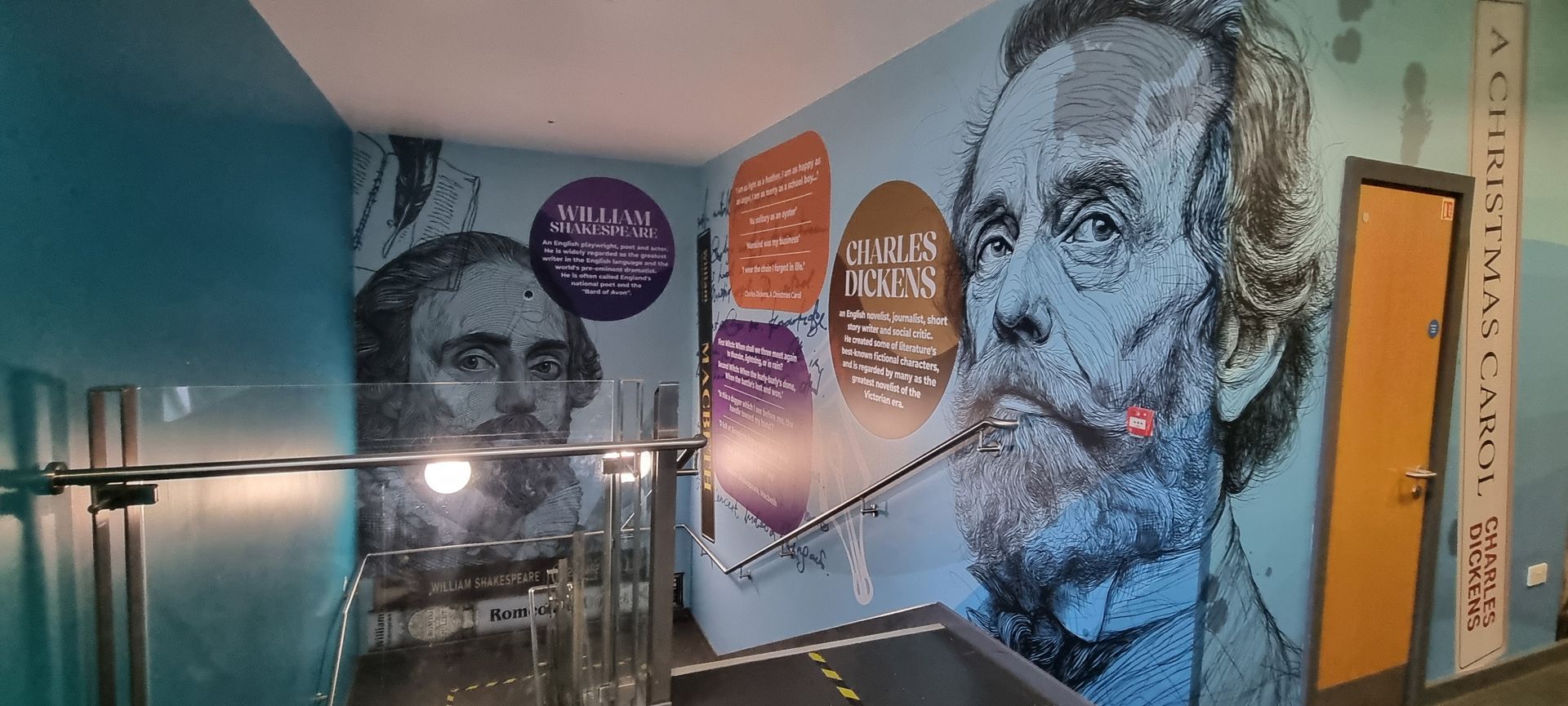
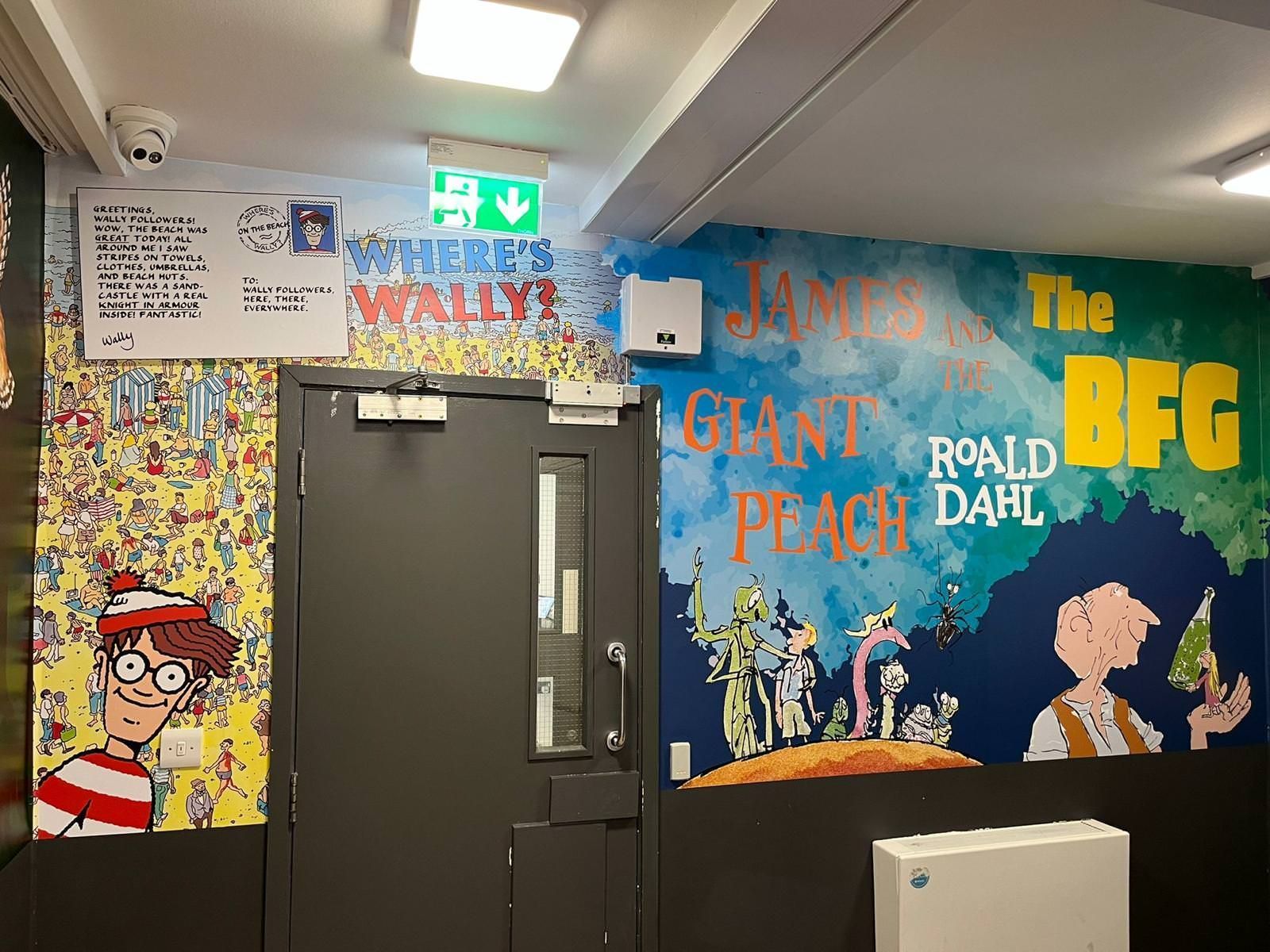
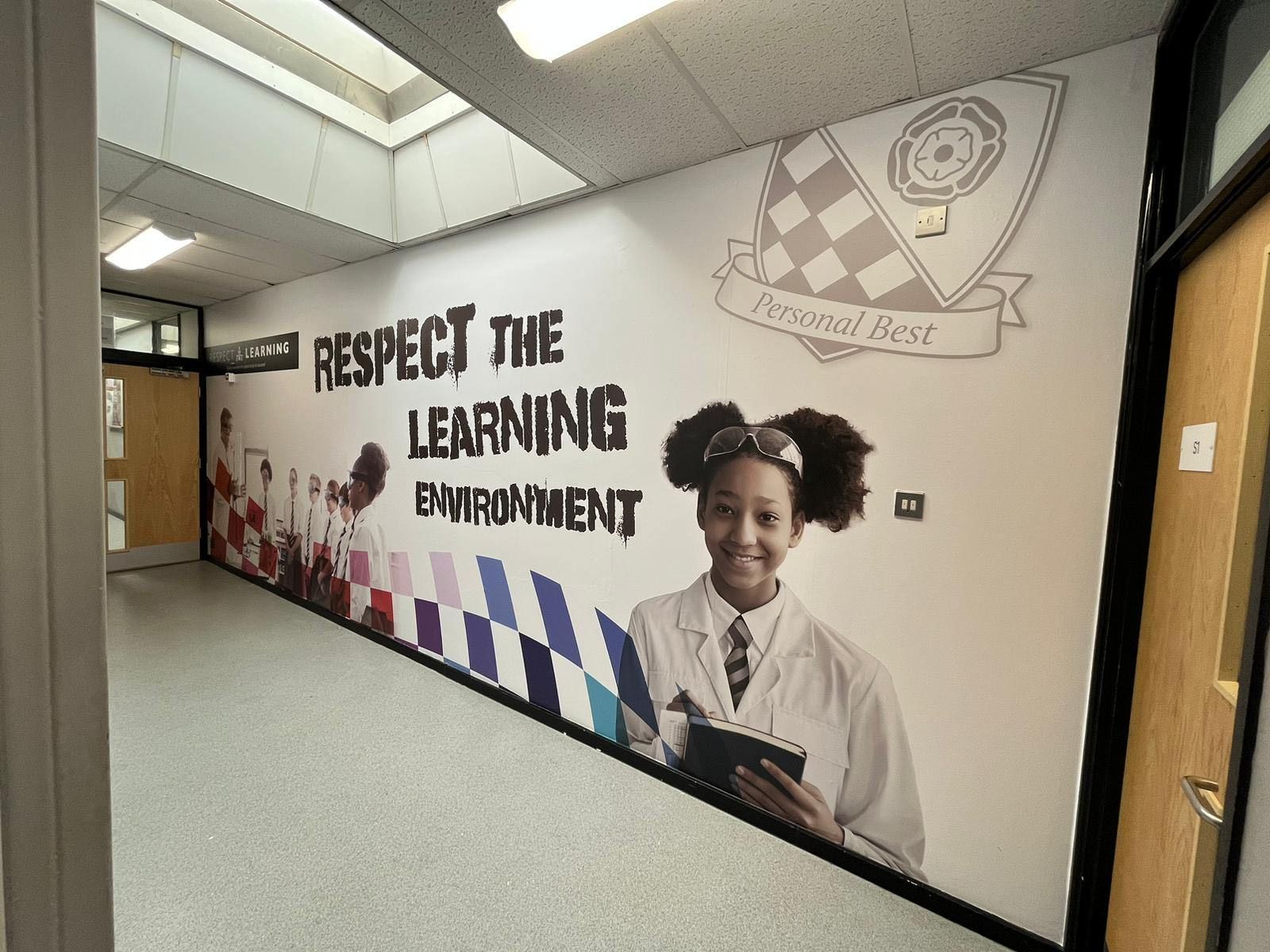
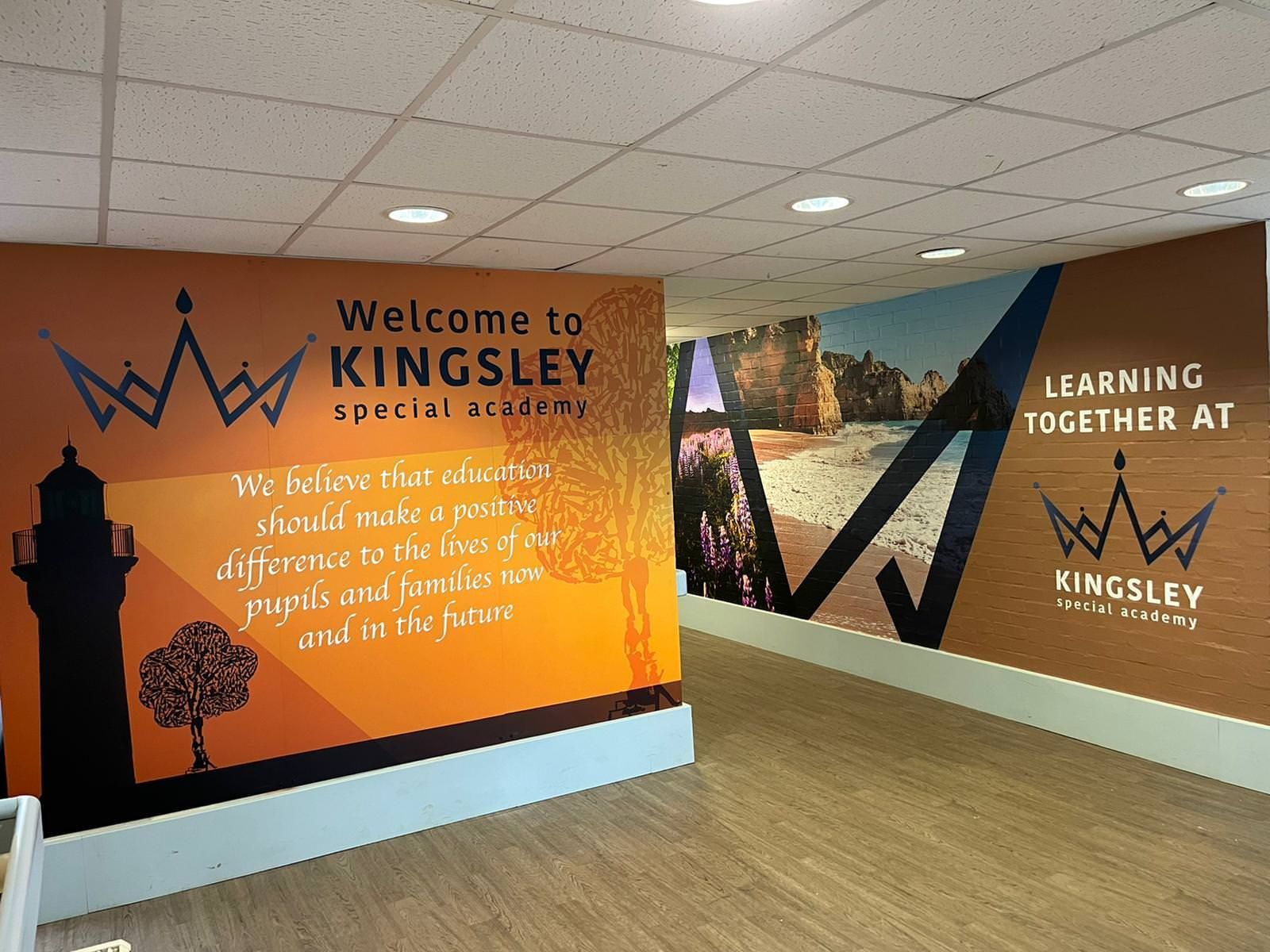
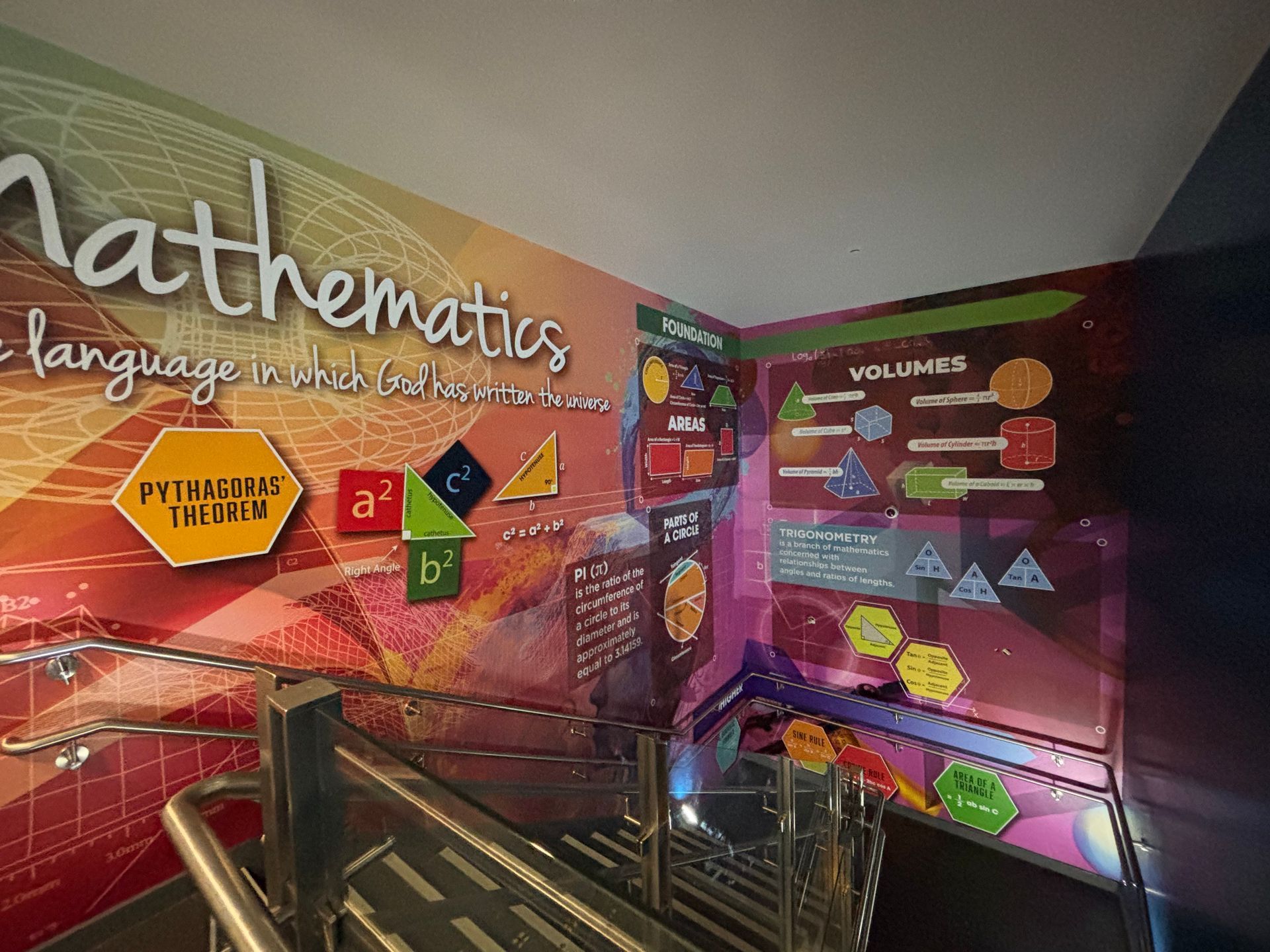
Quality, well-crafted graphics showcase professionalism, demonstrating the school's attention to detail and reflecting positive management and educational standards.
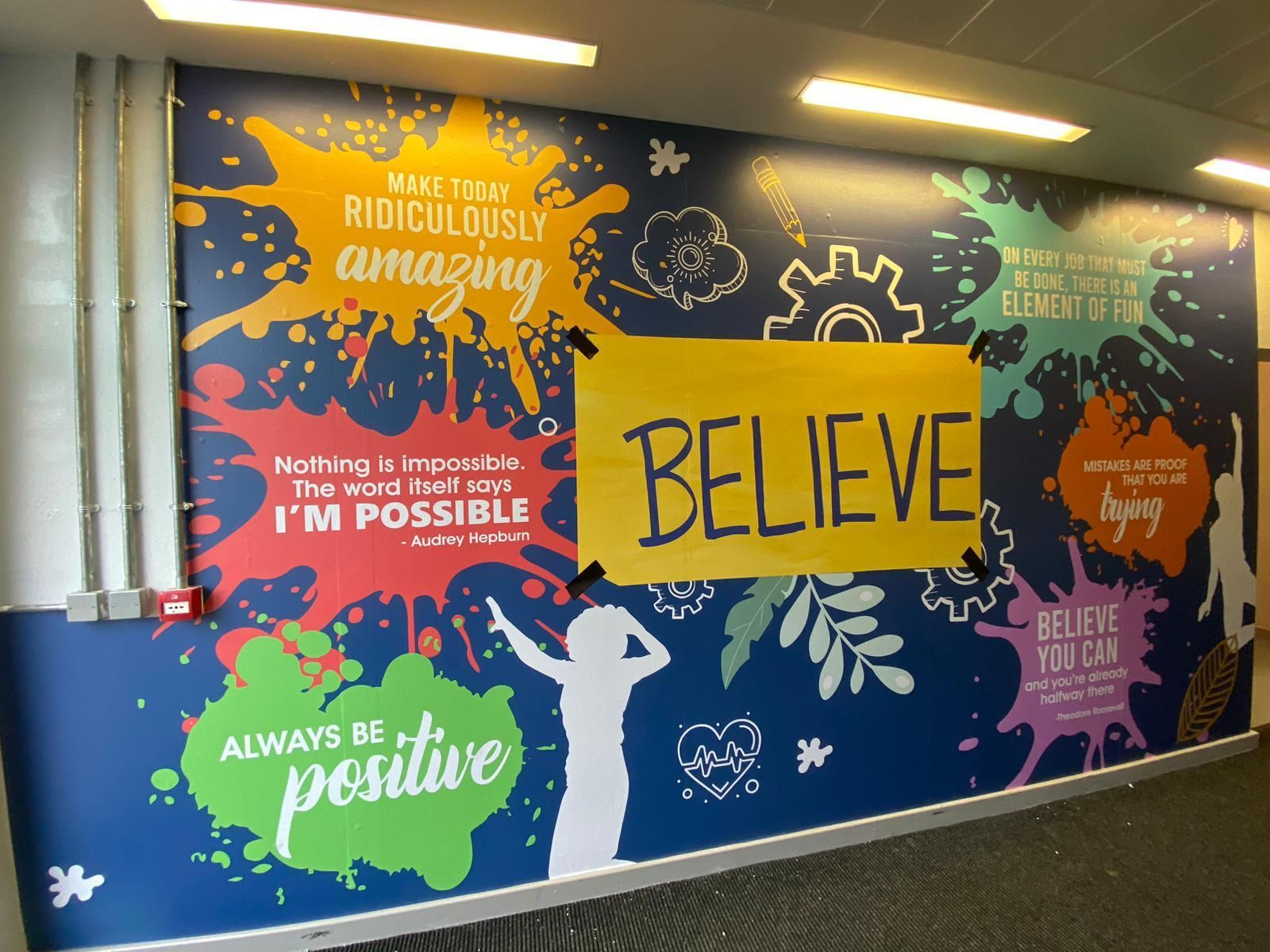
Elevating Professionalism with Exceptional Wall Graphics
Exceptional wall graphics enhance the perception of professionalism and attention to detail within a school setting. This, in turn, contributes positively to the school's management ethos and educational benchmarks. Here are key strategies to ensure your wall graphics exude professionalism;
Essential Principles for Crafting Professional Wall Graphics
Emphasis on Quality and Precision;
- Utilise High-Resolution Imagery; Employ high-resolution images and vector graphics for enhanced clarity and sharpness.
- Professional Finishing Touches: Opt for printing techniques and materials that are professional-grade and resistant to fading and wear and tear.
Uniform Brand Representation;
- Maintain Consistent Colour Schemes; Depict the school's colours across all graphics to reinforce its brand identity.
- Incorporate Logo and Mascot: Ensure that the school's logo and mascot feature prominently within the designs.
Sophisticated Typography Choices;
- Opt for Readable Fonts: Select fonts that are easily discernible from a distance while avoiding overly ornate styles that may hinder readability.
- Student Accomplishments: Create designated areas to display student achievements and artwork in a manner that enhances the decor.
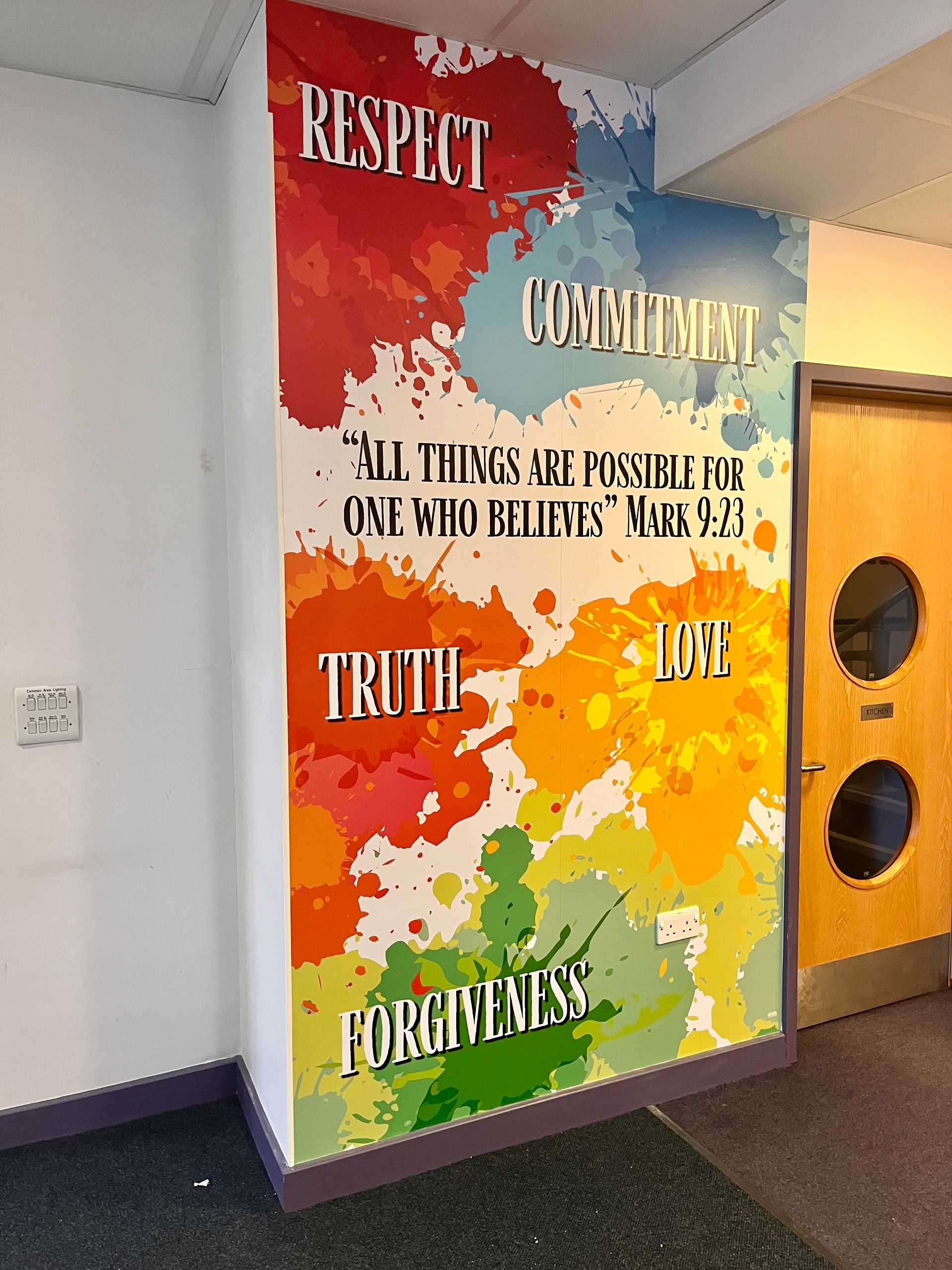
Strategic Placement for Maximum Impact
Entrance and Lobby Areas:
- Welcome Signs: Create sophisticated welcome signs with the school’s name, logo, and mission statement. Use a sleek, modern design that sets the tone for professionalism.
- Digital Displays: Incorporate digital displays that showcase announcements, achievements, and real-time information, providing a modern touch.
Hallways and Corridors:
- Wayfinding Graphics: Use clear, well-designed wayfinding graphics to help students and visitors navigate the school easily.
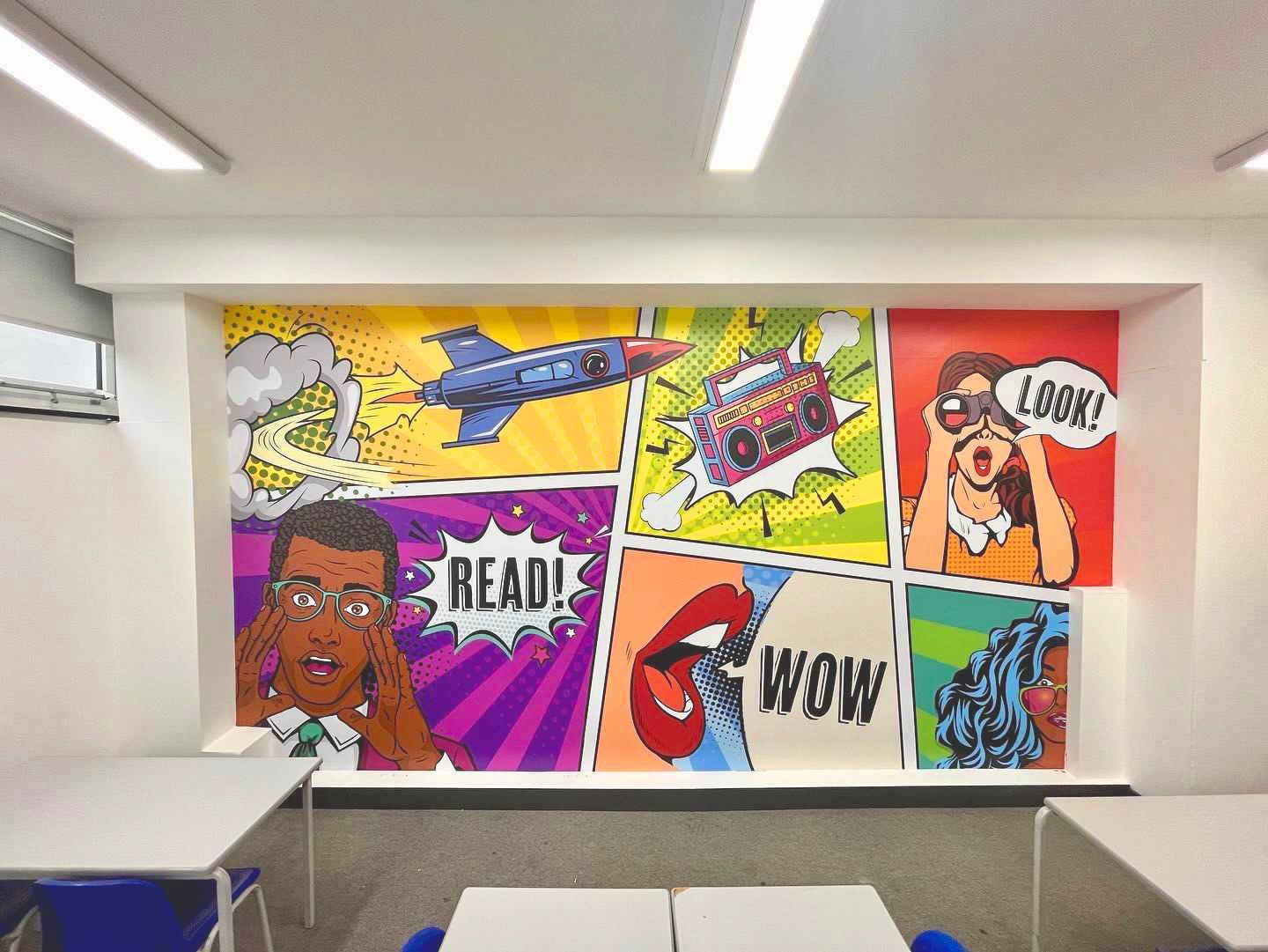
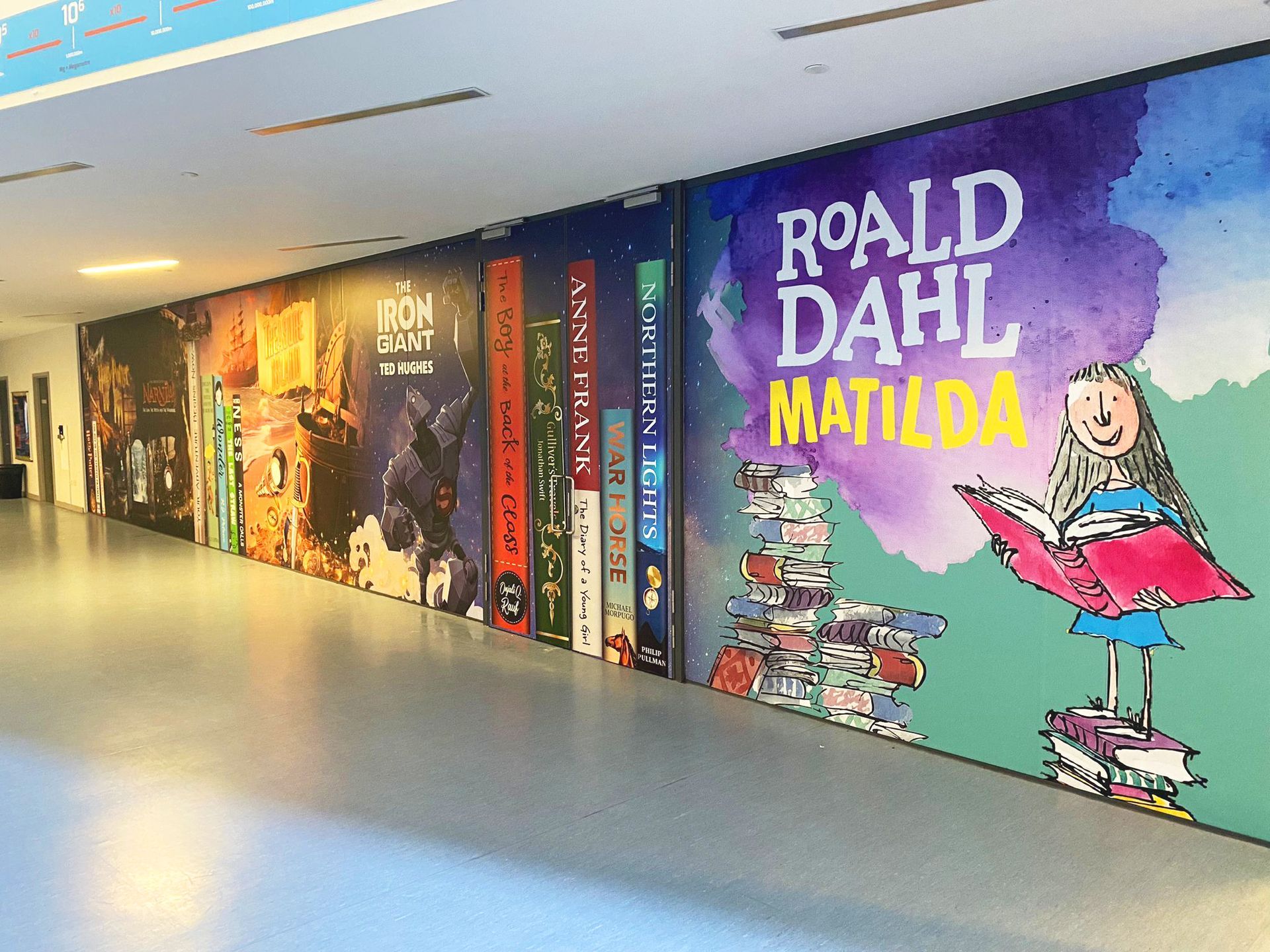
- Inspirational and Educational Quotes: Display quotes and educational content that are both inspiring, visually appealing, and professionally presented.
Classrooms and Learning Areas:
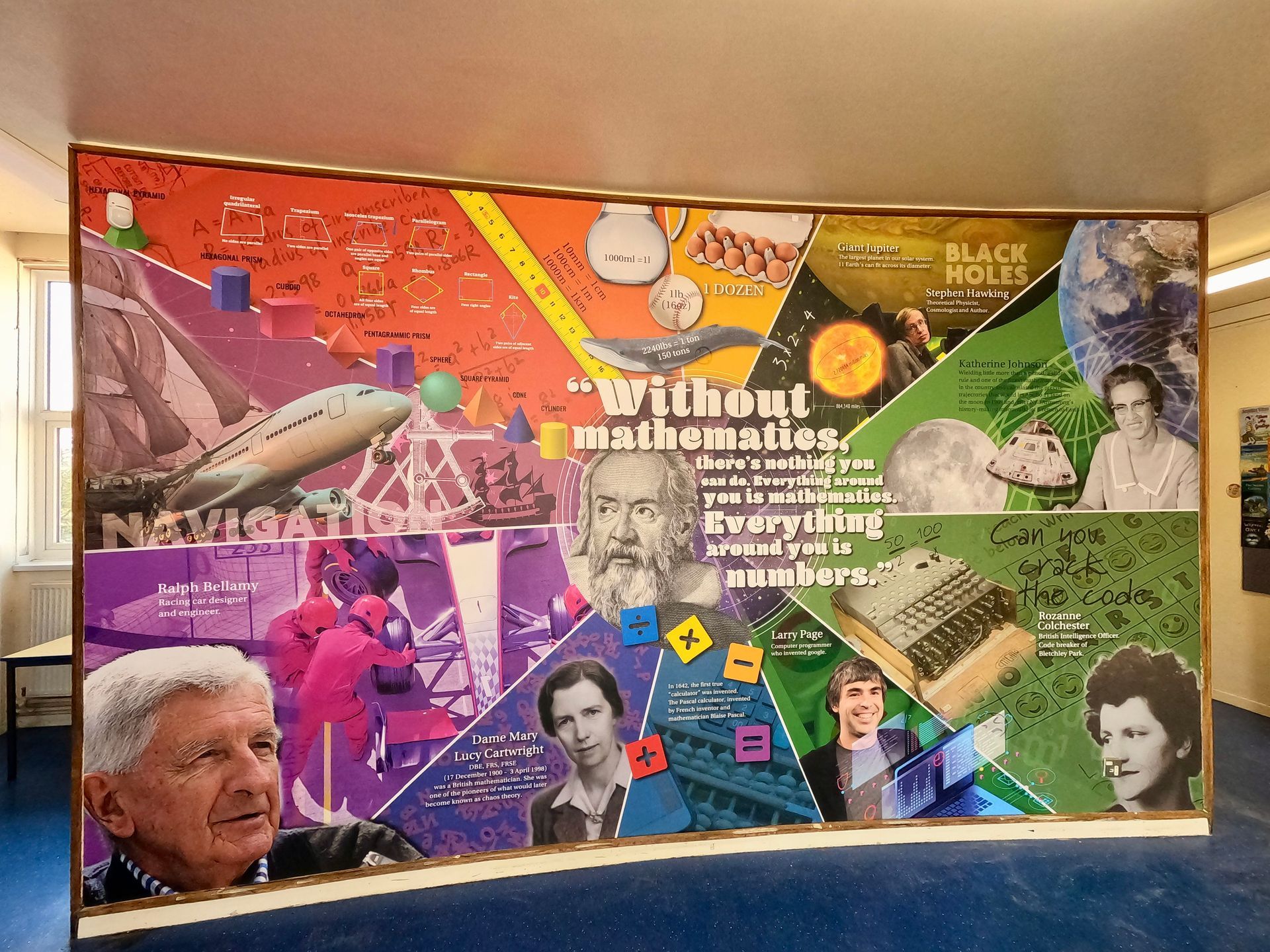
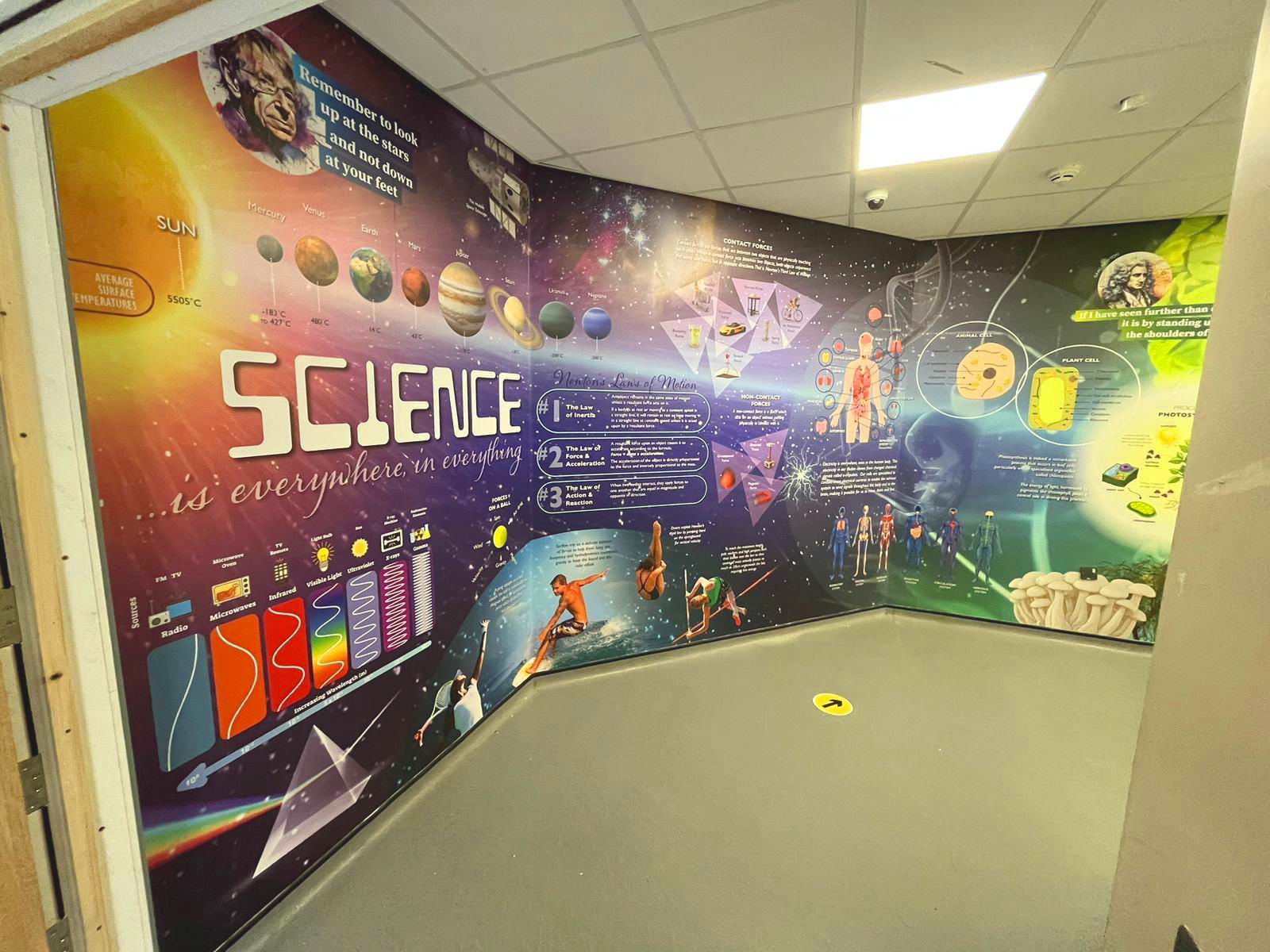
- Subject-Specific Graphics: Design classroom graphics that are both educational and aesthetically pleasing. For example, science classrooms can have detailed, high-quality illustrations of the human body or the solar system.
- Interactive Elements: Integrate interactive elements like writable surfaces that maintain a clean, professional look while allowing for dynamic use.
Common Areas and Cafeterias:
- Professional Displays: Use graphics that promote healthy habits and positive behaviour, presented professionally and engagingly.
- Student Achievements: Dedicate sections for showcasing student achievements and artwork, framed or presented in a way that adds to the professional decor.
Implementation Strategy
Design Process:
- Engage Professionals: Hire graphic designers and artists to create high-quality, impactful designs.
- Collaborative Approach: Involve stakeholders, including students, teachers, and administrators, in the design process to ensure the graphics meet the community’s needs and preferences.
Material Selection:
- Durable Materials: Choose durable and easy-to-clean materials, such as vinyl or laminated prints, to ensure longevity and maintain a pristine appearance.
- Eco-Friendly Options: Opt for sustainable materials and environmentally friendly printing processes.
Installation:
- Professional Installation: Use professional installers to ensure the graphics are applied smoothly and correctly, avoiding bubbles, wrinkles, or misalignment.
- Safety Standards: Ensure all materials and installations comply with safety standards and regulations.
Maintenance and Updates:
- Regular Maintenance: Schedule regular cleaning and maintenance to keep the graphics fresh and professional.
- Periodic Updates: Plan for periodic updates to keep the content current and relevant, reflecting new achievements, events, and educational priorities.
Examples of High-Quality, Professional Graphics
Entrance Mural:
- Design: A sophisticated mural featuring the school’s name, logo, and mission statement, set against a backdrop that reflects the school’s values and history.
- Impact: Creates a solid first impression, conveying professionalism and pride in the school’s identity.
Wayfinding Graphics:
- Design: Clear, stylish signs that guide visitors and students to different parts of the school. Use consistent colours and fonts for a cohesive look.
- Impact: Enhances the user experience, making navigation easier and showcasing the school’s attention to detail.
Educational Displays:
- Design: High-quality educational classroom graphics, such as detailed maps, scientific diagrams, or historical timelines.
- Impact: Supports learning while adding to the professional and polished appearance of the learning environment.
Achievement Walls:
- Design: Elegant displays of student achievements, awards, and artwork, presented in frames or under glass to protect and highlight the work.
- Impact: Celebrates student success and adds to the decor’s professional appearance, motivating students and impressing visitors.
Final Thoughts
By incorporating high-quality, well-designed wall graphics, schools can significantly enhance their visual appeal and project an image of professionalism and excellence. These graphics beautify the space and convey a message of high standards and meticulous attention to detail, reflecting on the school's overall management and educational environment.